

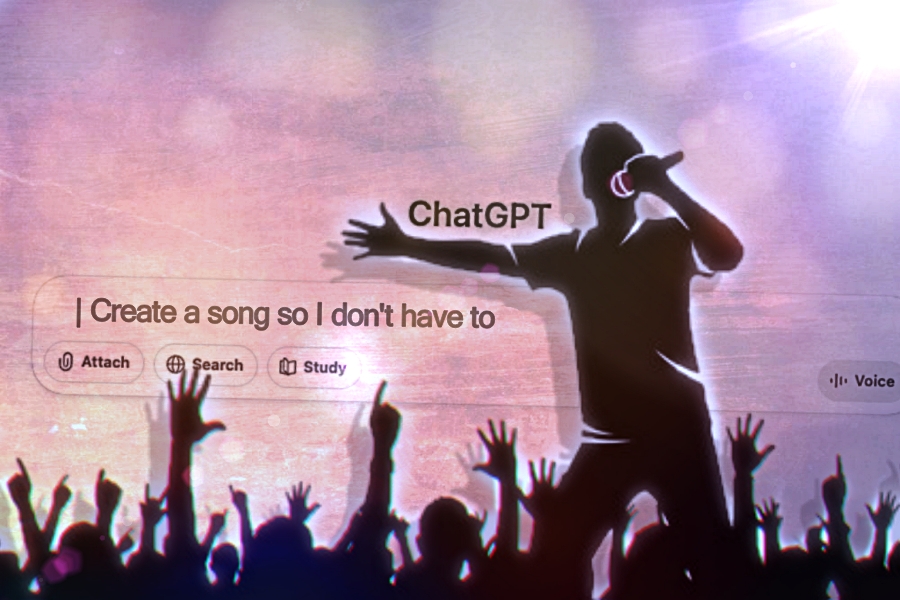

Sometime around midnight during a cold autumn night of 1969, 20-year-old Gospel singer Merry Clayton walks into a Los Angeles recording studio. Wearing silk pajamas, she’s four months pregnant with her hair still in curlers. She was summoned there by producer Jack Nitzsche to record background vocals for a rock band she hadn’t even heard of. The Rolling Stones.
Clayton reviews the lyrics, steps into the booth, and sings. What comes out is one of the most staggering vocal performances ever committed to tape. Around the 3:00 mark of what would become “Gimme Shelter,” Clayton pushes her voice so far past its limit that it audibly cracks twice. You hear it on the word “shot” and again on the word “murder.”
During the second crack, you can hear Mick Jagger in the background yelling, “Woo!”
This was not a produced reaction or a planned moment. It was a human being caught off guard by the raw power of another human being pushed beyond the emotional core of what she’s being asked to sing. Clayton later said she suffered a miscarriage after the session, which at the time she believed was connected to the physical strain she experienced.

None of that emotion was engineered. The recording is vulnerable, emotional, and above all else, irreversibly human. It happened because a woman showed up in the middle of the night, opened herself completely, and gave everything she had to a song about a world coming apart at the seams. A prompt could not have written it. A model could not have generated it. It could not have been made by anything other than a specific person on a specific night who had a specific life behind her. And she left a piece of it on tape forever.
Which brings us to the conversation about artificial intelligence. Specifically, AI music.
Many people in the music industry don’t want to talk about it at all, much less with any frankness. So let’s drop the politeness: If an artist releases an AI-generated album and calls themselves a musician, they’re claiming authorship over something they didn’t truly author. A disclaimer that says “created with the assistance of AI” doesn’t transform authorship into authenticity. It simply acknowledges that the work being presented as artistic expression wasn’t fully theirs to begin with.

I’ve spent a significant portion of my life in recording studios. I’ve been part of sessions that stretched on for months, where every note, chord, and breath was treated like it mattered. Because it did. I’ve watched engineers spend hours positioning microphones with surgical precision, chasing the exact sound a song needed. I’ve stood in control rooms holding my breath, turning off my brain, and letting something deeper take the wheel to lay down a riff or bass line in a way that served the songwriter’s vision. Their blood, sweat, and tears went into those songs, and it was the producer and crew’s job to honor that.
The idea that any self-proclaimed artist would willingly choose to replace any part of that process with a text prompt genuinely depresses me.
A certain kind of AI apologist thinks transparency is the same as integrity. They believe that slapping a disclaimer on their product that says “Created with the assistance of AI” somehow balances the moral ledger. It doesn’t. That isn’t a question of transparency or disclosure.
Admitting the music isn’t really theirs doesn’t make it theirs either. It just means they know what they did and went ahead anyway. That’s somehow just as bad as not acknowledging it altogether. It’s the artistic equivalent of a ghostwritten memoir, in which the celebrity does a press tour, calling it “my story.” The admission is right there in the acknowledgments. It doesn’t change who receives the credit.
Here’s the question few people in the AI music conversation will ask: What exactly is the artist offering the listener?
Even at its most superficial, music has always been a transaction of genuine feeling between human beings. The artist feels something, be it love, loss, rage, longing, or whatever. They encode it in sound, the listener receives it, and something in them responds. That response is real because the original feeling was real. The chain holds because there’s a person at both ends of it.

AI breaks the chain. There’s no feeling on the sending end, so there’s no meaningful reception at the other end. The listener is asked to have an authentic emotional experience in response to something that was never emotionally true to begin with. That’s merely an imitation of a transaction. Naturally, not every song is required to be truthful or express a real emotion. But what if the very nature of the art in question is bound by emotional integrity?
Think about what secular music, at its core, asks of people. A love song works because somebody actually loved someone. A breakup song lands because a heart actually broke. When that song is generated by an algorithm that someone fed a prompt, the longing has disappeared. There’s no person. It’s just pattern recognition dressed up as feeling. And most listeners will sense the difference even if they can’t name it just yet. The music will wash over them and leave no mark because it came from nowhere and went nowhere.
Now take that a step further. Think about religious music.
Regardless of how you feel about the genre or spirituality in general, Christian music already takes enough heat for feeling performative and emotionally hollow. And most of the time, rightfully so. The criticism stings because worship music, when it’s real, should be among the most vulnerable things a person can create. It’s someone opening themselves up before a God and saying, “Here I am. This is what I have. This is what I feel.” At its best, it invites the listener into a moment of genuine spiritual exposure.
AI Christian music isn’t just creatively bankrupt. By its very definition, it borders on blasphemy. There is no soul, faith, confession, or surrender behind it. Just a language model’s approximation of devotion dressed up in the vocabulary of worship and offered to the church as the real thing. If that doesn’t give an AI-using Christian artist real, serious pause, I don’t know what would.
Over the years, I’ve had the privilege of speaking with many different engineers and producers.
These folks have dedicated themselves entirely to the craft of capturing music. Through the site’s podcast, this has included people like Scott Evans and Steve Albini, to name a few. They understood their job wasn’t just technical. It was sacred in its own way. From an artist’s heart, to tape, to record. That chain of care and intention isn’t a simple thing, regardless of how sophisticated audio technology has become.

These professionals spent decades, in some cases their entire lives, learning how rooms sound, mics behave, and instruments respond. Maybe most importantly, they discovered how to make a human performance feel even more alive when it comes out of speakers. They did it so that artists could focus on being artists.
When an artist chooses AI instead, they’re not just cutting corners on their own work. They’re rendering that entire ecosystem of craft and devotion meaningless. They’re effectively saying that none of it was necessary and that a subscription service could have done it all along. That particular kind of insult travels a long way down the line.
Much of modern music, rock and roll specifically, was built on a foundation of stolen credit.
We still haven’t fully reckoned with this fact, and it gets especially lost in the conversation about AI music. And it shouldn’t: As I’ve written before, rock and roll was born in Black communities before being commercialized by an industry that stripped away its creators while profiting from their work. The music survived exploitation because the people making it kept creating anyway.
That history matters here, especially regarding literal theft! Remember when artists and labels alike were fighting against Napster and file-sharing software? That had mostly to do with copyright, compensation, and ownership. Generative AI systems are built by absorbing the uncompensated pre-existing work of countless musicians. Using large language models (LLMs) reduces decades of human expression to statistical patterns that can be repackaged on demand. It’s the logic of appropriation – automated and industrialized.
But rock didn’t just inherit that history: It inherited an ethic, too.
For generations, credibility wasn’t something you declared. It was something you earned through practice, failure, collaboration, and, most importantly, the slow work of finding your own voice. That’s true whether you learned how to play on a yard sale guitar, performed for 10 people, or recorded songs in a bedroom. The common thread wasn’t suffering for its own sake. It was showing up and doing the work.

AI doesn’t simply skip that process. It treats the entire journey as optional, as though experience, sacrifice, and artistic growth are inefficiencies to be optimized away. But such creative elements shouldn’t be seen as obstacles standing between the artist and the song. They are the song. Strip that away, and what’s left may resemble music, but it no longer carries the weight of a life behind it.
The most common defense is that AI music is simply another tool.
Apologists will insist that artists have always adopted new technology: the electric guitar, synthesizers, Pro-Tools, and more. But the comparison doesn’t hold. Every tool on that list still requires the human to bring something irreplaceable, including years of practice, creative judgment, and a point of view developed through real experience.
However, a real musical tool amplifies the human. Generative, prompt-based AI doesn’t amplify anything. It replaces the human entirely and leaves a soulless husk in its place. Technically plausible, emotionally absent, made by no one for no one.
Most musicians who’ve been at this for years know the difference. Even listeners who can’t articulate it can still feel it. AI music never fails to dip into the uncanny valley. It lacks the human touch of imperfection. And the engineers who gave their careers to getting it right know exactly what’s been discarded when an artist resorts to a prompt. They know what it feels like to be in a room where something real is being made. The weight of it, the silence before hitting record. No algorithm has ever held its breath before a take or experienced that collective exhale when it works.
An AI text prompt cannot replicate humanity.
Go back and listen to “Gimme Shelter.” Listen past the cascading guitars on the intro. Past Jagger’s call to action. Go all the way to that moment just after the three-minute mark where Merry Clayton’s voice breaks. That’s a woman at midnight, four months pregnant, summoned by strangers, giving everything she had and then some, on tape forever. And this is just a single example! Think of every other artist who can share similar stories of soul-baring creation. That’s what music is and what’s at stake.
Audio technology has come a long way in a very short time. But AI music isn’t a new chapter in the story. It’s merely a shortcut taken by people who didn’t want to write their own story and figured nobody would notice the difference. But Merry Clayton notices. So does every engineer who has ever lost sleep over a mic placement. Same for every indie artist who ever played to an empty room and kept going anyway.
That’s the difference between generating a song and creating art with a piece of yourself.
Further reading: The Environmental Effects of AI| Artists and Record Labels Worried About AI | Christian Music and AI | How AI Steals Music | How Generative AI Isn’t Fair Use | How AI Harvests Voices For Data Recreation |