


When you’re a kid, developing your taste in music is vital to learning who you will be as a person. Most of us start out listening to whatever our parents listen to before branching out and exploring the musical tapestry. For me, Chicago’s Oldies 104.3 was my household soundtrack. If not that, it was my Dad’s Motown and Beatles records or Mom’s ’80s Top 40. Don’t get me wrong, I still love me some synth-pop and Smokey Robinson. But stumbling across Slayer, Guided By Voices, or The Sweetest Ache in printed journalism was monumental! And that was before the internet!
Magazines like Alternative Press were like treasure maps. Sure, they were good for recommendations, but they actually provided me a living, breathing entity of guitars and angst. It was the truth in print – the kind not found on Sundays with Casey Kasem. It was a Bible of rock n’ roll that never bowed to the mainstream.
Fast-forward to 2026: The truth in that journalism has been dismantled.
Unlike the days of magazines and MTV News briefs between music videos, we now get our updates via social media. In fact, that’s where I found out the entire editorial staff of Brooklyn Vegan, Revolver, Goldmine, Metal Edge, and Alternative Press had been laid off in a single coordinated sweep. Publications that once chronicled underground music, preaching the alternative gospel to anyone willing to hear it, were gutted.

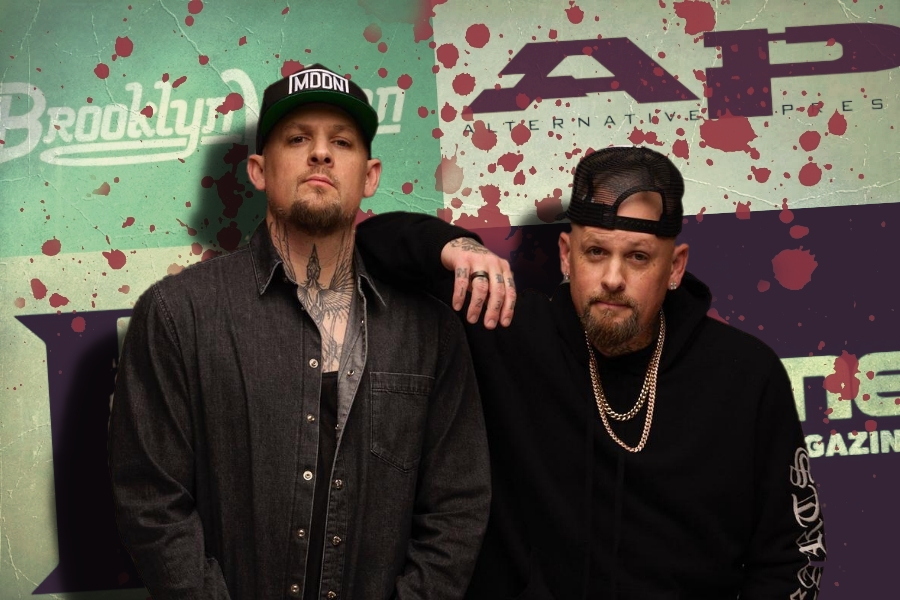
The company responsible for the exodus is Veeps, the ticketed live-streaming platform co-founded by Joel and Benji Madden in 2017. Most people know them as the pretty-boy twin frontmen of Good Charlotte. Which in itself is the highest form of irony. As a pop-punk band, they spent the early part of their career complaining about the rich and famous. All the while, the group was managed and marketed by a mainstream label. But I digress.
In 2021, Live Nation purchased a 51% stake in Veeps, while the Madden brothers retained the remaining 49%. In the years since, Veeps quietly expanded their media arm. They absorbed music publications through their MDDN company and a portfolio previously held by Project M.
Capital was always the goal with the Maddens, even if it means killing journalism.
The pursuit of monetary gains at the expense of integrity often seems to come up on the topic of Good Charlotte. I don’t really want to get into the semantics of “punk” and/or “sellout,” but it’s kind of hard when the Madden brothers epitomize the very worst of both. By definition, pop-punk is the antithesis of what it means to be punk. Instead of being anti-establishment and fighting fascism, pop-punk has always mostly been about petty teenage drama and superficial angst. (I talk about this at greater length in this piece)
As for being “sell-outs,” the Madden brothers wanted to be successful, and they somehow achieved it. And there’s nothing wrong with that. However, that doesn’t make it any less insufferable. They’re grown adults who’ve spent their careers marketing themselves as teenagers to teenagers.

They aren’t the first band to get dunked on for being superficial, labeled either industry plants or sell-outs. But most bands who achieve mainstream success and get rich don’t buy out music publications. They’re not really making a good argument for the idea of “punk.” Doesn’t that mean Good Charlotte is exactly what they were accused of being? So much for self-awareness.
I’ve never had patience for pop-punk bands, much less Good Charlotte.
At the risk of sounding like a hipster, I clocked the Madden brothers straight out of the gate. A lot of punk fans did. The band’s market-tested rebellion always felt like, at bottom, a product. It was punk for well-off kids who thought the genre was more about Got2b Glue, Hot Topic, and being angry at Mom. They never fought any kind of systemic oppression. They didn’t fight for anything. Just insufferable chad-jags appropriating a movement far more important to the zeitgeist than anything they ever or will ever create.
It’s hard to keep crying about rich people when you’re a staple on Billboard and Nickelodeon. Above all of that, they were also just a terrible band to hear. They had the infamous combo of whiny vocals, derivative compositions, and that boyish-nasally voice thing where the singer tries to sound like he is ten years younger than he is.
Also worth noting: One of the Maddens dated Hilary Duff starting in 2004. It doesn’t matter which twin. They’ve spent careers being interchangeable. He was 25. She was 16. This isn’t a punchline. A grown man in a band marketed to teenagers dated an actual teenager. The industry around them treated it like a cute tabloid item instead of what it was: grooming and pedophilia. Madden himself has since said he wouldn’t let his own daughter do the same thing at that age. Whatever – I’m not interested in extending grace here. These wanks got a pass for that behavior back then. Now, they get to play benevolent media moguls? Not on my watch.

Normally, I’m dead against gatekeeping.
But on the topic of Good Charlotte, all of the gatekeepers were correct. Maybe if more people listened to the gatekeepers, we’d still have these publications today. Watching the band grow into something that buys up and guts outlets like a private equity firm isn’t ironic to me. It’s just the logical endpoint. Selling out was never really a betrayal for that scene. It was simply the business model from day one. My God, I hate late-stage capitalism just as much as I hate pop-punk chuds.
And let’s be clear about what got gutted. Alternative Press covered the rise of My Chemical Romance, Fall Out Boy, and, in a twist that should embarrass everyone involved, Good Charlotte themselves. That connection isn’t incidental. AP didn’t just cover Good Charlotte after the fact. It was part of the machine that built them a scene to belong to.

These weren’t blogs chasing clicks. They were the people who showed up to shows nobody else would cover. They put bands like Good Charlotte on a cover before anyone had a reason to. And the thanks they get, decades later, is getting bought out and hollowed out by the same band they helped make famous. You don’t get to be built by a scene and then gut the infrastructure of that scene. That’s eating the hand that fed you and dressing it up as a business decision.
But as much as my hatred for Good Charlotte seethes on, I don’t think the Maddens are the whole story.
Alternative Press was absorbed into MDDN in 2020. BrooklynVegan, Goldmine, and Revolver passed through Project M before landing at Veeps in 2024 or 2025. Which means that somewhere along that chain, the people running those outlets made a call to sell to a media conglomerate rather than stay independent. Nobody builds a publication just to sell it off happily. They sold because the alternative looked worse.
After all, ad revenue collapsed a decade ago. These days, more people watch an Anthony Fantano video on YouTube than read an actual journalist’s thoughts on an album. That’s not a defense of Veeps, mind you. All of this is an indictment of an industry that leaves indie outlets only two exits: sell out or shut down.
Remember: Independent music journalism is infrastructure.
That part doesn’t get said enough amongst the “corporate villain did a bad thing” headlines. Unless they’re industry plants, a band doesn’t go from playing a basement to an arena because an algorithm says so. They get there because somebody actually goes to shows. Someone reviews an album no one will touch yet. A writer gives an artist their very first interview, introducing them to the world. That’s what Alternative Press did for me. Do you think I would ever discover Buffalo Tom or Teenage Fanclub between my Dad listening to The Four Tops and my Mom watching Madonna on MTV?
When the infrastructure gets gutted, the effect isn’t abstract. Indie labels lose the trusted outlets that used to get a record in front of the right ears. Fans lose a filter they trusted in a media environment increasingly built on paid placement and corporate noise. Worse yet, an entire generation of music writers might have become the next generation’s most trusted voices. Instead, they lose the beat entirely because there’s nowhere left to build one.
Algorithms optimize for what’s already popular. There is no discovery.
Scene journalism is one of the only mechanisms that exists to surface what isn’t popular yet but should be. None of this happened in a vacuum, either. Rolling Stone folded into Penske Media’s larger cost-cutting, which has hit Variety and Billboard too. Sony’s Blast Beat Network gutted Metal Injection and MetalSucks in early 2026. Meanwhile, Condé Nast folded Pitchfork into GQ back in 2024. I remember talking with fellow journalists at Pitchfork Music Festival in 2024, and everyone kept asking each other, “Could this be the last one?” and it was.
The layoffs at Veeps may be the biggest single hit to the punk, metal, and alternative side of music journalism. But they’re just one more data point in a pattern that’s been building for a decade. Moreover, it’s consolidation and cost-cutting. The media ownership class increasingly doesn’t come from or answer to the scenes their properties supposedly cover.

And that’s really the throughline, isn’t it? Veeps isn’t just owned by two superficial chuds from a pop-punk band people loved to dogpile. Good music journalism gets written by people who go to the shows. People who are committed to art and craft, not a spreadsheet. When you move ownership far enough away from the ground floor, the incentives change. It doesn’t matter whether or not anyone up the chain actually means any harm. That’s just what happens when a media property gets treated like a line item instead of an item of community trust.
Fortunately, there’s a silver lining: The scenes covered by these gutted publications didn’t start with them and won’t end with them.
Indie journalism isn’t dead: it just doesn’t get the headlines the corporate implosions do. Outlets like New Noise, Post-Trash, and The Bad Copy are still out here every day. They review records nobody’s paying them to review. They care about the scenes they cover and not much else.
That’s the same reason Bearded Gentlemen Music exists. We don’t run ads and haven’t done so since year one back in 2012. Nobody’s paying us to like a band, and nobody’s going to buy us out and gut the staff. Mainly because there’s no staff to gut in the traditional sense. Just a group of people who love music enough to write about it. That’s not a business model a private equity firm would ever look twice at, and that’s exactly the point.
The outlets that got gutted this month didn’t die because people stopped caring about music journalism.
They died because they got big enough, and profitable enough, to be worth strip-mining. The stuff that survives is the stuff that was never built to be sold in the first place. Somebody is already building the next BrooklynVegan, Alternative Press, Pitchfork, or Rolling Stone.
Maybe it’s this very publication? That’s right, I’m throwing our hat in the ring, unabashedly. When I joined Bearded Gentlemen Music, I wanted nothing more than to be a trusted voice in music journalism. Even though we don’t create a physical magazine, the idea still gets me. Anyone who discovers their new favorite artist through one of my articles warms my heart. Why? Because I remember how cool it was to learn about Slint or Possum Dixon in Alternative Press. I’m not even sure if people in 2026 can even remember how they were introduced to their favorites.
The unceremonious end of these publications doesn’t ask if music journalism will survive.
It asks whether the people who care will support the next version before a conglomerate buyer eats that one, too. But the responsibility goes beyond the writers and publishers of the smaller indie outlets. The readers have to do their part. By showing up, subscribing, reading, and sharing an article, readers support a publication. A publication can then support an artist, and an artist who’s supported gets to keep making art for readers and writers alike.
That is the infrastructure that can actually beat the algorithm. It’s ours to build if we want it badly enough. As for the writers at Bearded Gentlemen Music, we’re choosing to rage against the machine rather than be swallowed by it.