


Each year, when the Rock & Roll Hall of Fame announces its inductees, an inevitable barrage of social media outrage appears. Self-proclaimed musicologists, critics, and even some artists complain about who should or shouldn’t be inducted. Sadly, the discourse rarely touches on art. Instead, it fixates on the perceived sanctity of rock, casting pioneers of adjacent genres as mere guests. It’s a weird hill to die on when you think about it.
The Rock & Roll Hall of Fame class of 2026 is Phil Collins, Iron Maiden, Billy Idol, Joy Division/New Order, Oasis, Sade, Wu-Tang Clan, and Luther Vandross.
Personally, I don’t care about the Hall. Which legacy act gets a trophy or is snubbed is the least of my problems in the world. However, I do care about the integrity of the cultural archive. I care about celebrating the creators who actually moved the needle, and I care about the assurance that credit is given where it’s rightfully due. The Hall should be a record of historical influence. But every year, without fail, the public discourse proves how little people understand about the origins of the music.

Predictably, this year’s induction cycle is steeped in Gen X nostalgia. This has ignited a debate over three names in particular: Sade, Wu-Tang Clan, and Luther Vandross. While I’m sure no one with ears denies the talent and influence of these artists, the loudest gatekeepers deliver a lingering statement: “Sade, Wu-Tang, and Luther aren’t rock.”
To argue against the inclusion of soul and hip-hop isn’t a matter of taste. It’s a fundamental misunderstanding of history.
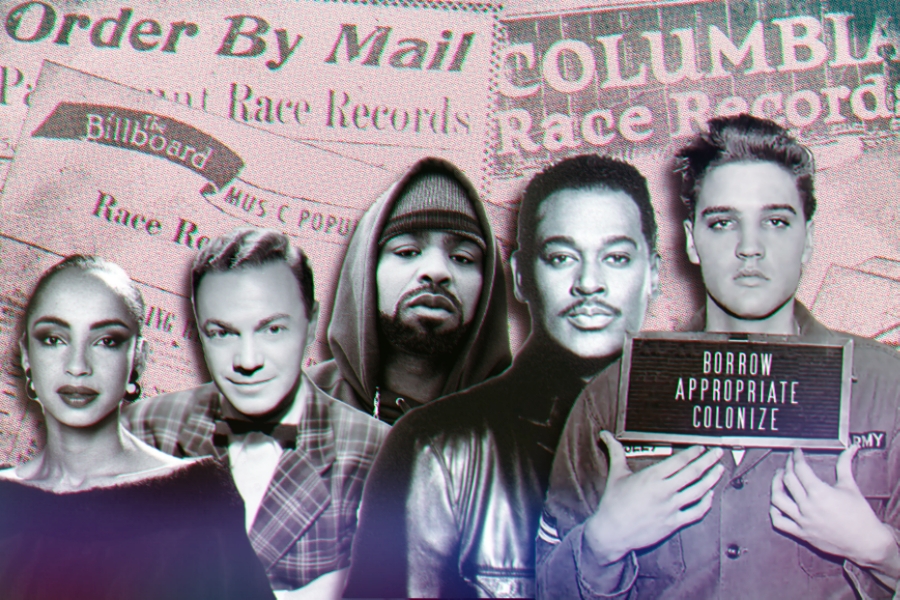
The idea that rock-adjacent genres are separate genres is a modern fiction created for the sake of a segregated market. Not unlike how “indie” is code for “white kid plays guitar.” So, let’s go back to the beginning of genre labels. From the 1920s through the late 1940s, Billboard utilized a chart called Race Records. It really wasn’t a musical category as much as it was a socio-economic wall. Essentially, the Race Records chart existed to tell the industry which music was for Black people and which one was for white people.

In 1949, Jerry Wexler, a journalist for Billboard (and later a legendary record producer at Atlantic Records), recognized that the term “Race Records” was derogatory. His push for a rebrand led to “Rhythm & Blues.” As soon as the music had a label that didn’t explicitly single out the color of skin, white teenage audiences began to find it. That audience wasn’t just looking for something new and hip. They wanted the energy and raw honesty that had been thriving behind the race wall for decades.
By the 1950s, the industry realized that Black music was becoming the most profitable sound in America.
But it was still being produced by Black artists. That’s quite a dilemma for a country defined by Jim Crow. Cleveland disc jockey Alan Freed saw this firsthand. Freed’s business partner, Leo Mintz, was a record store owner and watched white kids flock to buy R&B records every single day. Both Mintz and Freed knew that, to push this music even further into the zeitgeist, they would need a linguistic loophole. The term had to clearly state what the product was while still appealing to the white parents who gave their kids money to buy records.
Even though they settled on the term “rock n roll,” Mintz and Freed didn’t invent the phrase. They merely poached it from Black culture, a multifaceted piece of vernacular:
The Physical: It described the raw, kinetic motion of a ship at sea.
The Spiritual: It described the fervor and literal rocking of the spirit found in Black churches.
The Carnal: It was a sexual slang documented in blues lyrics dating back to the 1920s, most notably, Trixie Smith’s 1922 record, “My Man Rocks Me (With One Steady Roll).”
When Freed brought the newly christened rock n roll to white radio, the spiritual and sexual layers were recontextualized. The white audience lacked the cultural context to understand what the term actually meant. By rebranding Black culture’s private language as a public commodity, the industry whitewashed and erased history.
In its infancy, mainstream rock n roll was a project of colonization.
The industry’s business model was simple: find a Black artist with a hit, have a white artist cover it, and collect the money. As unabashed as the model was, it worked. Very well, too! Look no further than Elvis Presley. Despite being a brilliant performer and influential to pop culture, he became the face of a movement he didn’t create. Worse yet, Presley is still unfairly credited as the king of rock n roll to this day.

By the time Black artists were accepted by the mainstream, the industry moved the goalposts again. While acts like The Beatles and The Rolling Stones never missed an opportunity to credit Black artists for the music they received accolades for, media outlets and labels shortened rock n roll to “rock.” Along with the format changing from singles to albums, the genre became defined by white, guitar-focused masculinity. This particular shift turned Black artists into mere guests in the house they built.
From the late 1960s through the 1980s, even legends like Jimi Hendrix, Prince, and Michael Jackson were treated like outliers.
Meanwhile, genres that were literal evolutions of the original rock n roll spirit (soul, funk, disco, house, and hip-hop) were treated as “other.” The media argued such genres were far removed from rock, failing to see that these genres were the most faithful practitioners of the original spirit. These genres were raw, rebellious, and unapologetically Black.

When the Rock & Roll Hall of Fame inducts acts like Wu-Tang Clan, Sade, or Luther Vandross, they aren’t checking the boxes like some sort of diversity hire. They’re acknowledging the landlords of the building. Those 3 artists alone represent the foundation of rock n roll: those main ingredients of the Physical, Spiritual, and Carnal.
I might not care about the Rock & Roll Hall of Fame, but I know their mission isn’t to please the gatekeepers who want to keep up the walls of segregation.
While social media creates an illusion of genre fluidity, a sharper, more insidious gatekeeping has taken hold. We’ve been conditioned to believe rock n roll is about aesthetics: distorted guitars, long hair, and wild antics. And while those things could very well be part of it, they aren’t the definition.

In fact, the very notion that rock n roll requires a guitar was added to the genre’s lore well after its inception.
If we go back to the era of race records, the piano was the dominant instrument in clubs, bars, and juke joints. While the guitar was a staple in the blues, it was mainly because of its portability and travel-ready nature. It’s much easier to ride in a car, train, plane, or on foot with a guitar across your back, as opposed to a piano. Sister Rosetta Tharpe, a Black woman, was one of the first artists to bring the electric guitar to the forefront in secular music.

Unsurprisingly, the same people who insist Wu-Tang Clan isn’t rock n roll are the same people who scream that Beyoncé has no business recording a country album. It’s a double standard that exposes the true nature of their purity argument. Why do they insist rock n roll needs to fit a particular demographic?
This audience has no problem when white artists incorporate trap beats and rap over country melodies. But as soon as a Black artist attempts to reclaim a sliver of credit for a genre they helped birth, the swords are drawn. If Black people created it, shouldn’t Black people have the right to decide what does or doesn’t fit the definition?
Sadly, this isn’t just a social media annoyance but a systemic strategy. We see it in the very architecture of music industry award shows, too.
No matter what they tell you, the Grammys didn’t create the “Best Rap Album” category to honor hip-hop. No, they invented it as a holding pen to keep Black artists from crowding the “Album of the Year” conversation. Around the time the category was created, hip-hop was becoming the dominant genre in the industry. It was a way to say, “You can have your trophy, just stay in your lane.” The irony is as thick as it is insulting. In the decades since, we’ve seen the industry continue to favor the palatable, often rewarding white artists for their “innovation” in Black spaces. Meanwhile, the originators are relegated to sub-categories.

Of course, you aren’t a racist if you don’t enjoy Wu-Tang or Vandross. But I do feel that how you judge which music belongs in which category can be an unofficial litmus test. Are you contesting the inclusion based on your opinion, or is your judgment based on systematic prejudices? Peeling back these layers might be painful, but it could also reveal deep-seated indoctrination of supremacy.
Including hip-hop, soul, and R&B in the Rock & Roll Hall of Fame is a restoration of the truth.
Moreover, it’s a refusal to let the marketing decisions dictate the historical reality of the present. By honoring these artists, the Rock & Roll Hall of Fame is acknowledging accurate history. More importantly, it declares that the spirit of Black culture was never a guest in the Hall. No matter which subset of rock n roll you prefer, the Black experience has always been the foundation. Don’t you think it’s about time we stop letting guests lock the owners out of their own house?

For more information on the Rock & Roll Hall of Fame, please visit RockHall.com