
The leaves have turned the color of jack-o’-lanterns, the nights are getting colder, and the blood on your television is looking particularly crimson. Halloween is here, and if you’re a fan of horror, there’s a good chance you’ve already burned through the usual suspects – especially this month. How many times can you watch Halloween or another Friday the 13th before Michael Myers and Jason Voorhees start feeling more like old roommates than terrifying killers?
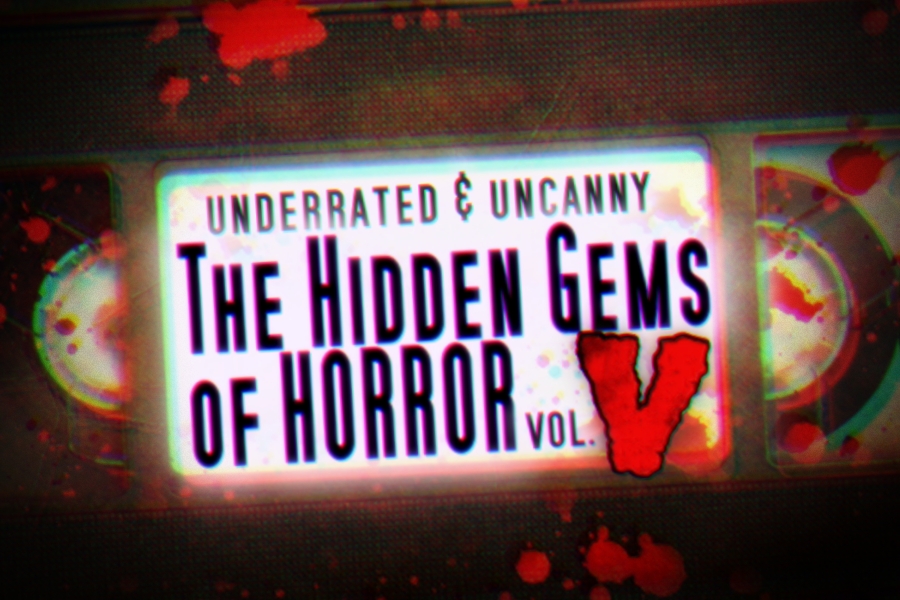
Welcome to Underrated and Uncanny: The Hidden Gems of Horror Vol. 5!
Fortunately, I’m essentially a trash bin for useless horror knowledge and a self-appointed connoisseur of the macabre. So while everyone else is revisiting the classics, I’ve dug through the genre’s bargain bin to find a few movies that deserve a little more attention. These aren’t necessarily the greatest horror films ever made, but they’re weird, creepy, occasionally ridiculous. And that’s exactly the kind of alternative viewing that can make a Halloween movie marathon feel fresh again. Consider this your invitation to dig a little deeper into the dark corners of horror. Just don’t blame me if you find something you can’t unsee.
A Blade In The Dark (1983)
A film composer rents a secluded villa in the Italian countryside while scoring an upcoming horror movie. But when a neighbor is brutally murdered, he begins poking around for answers. Soon he finds himself increasingly tangled in a series of disappearances, suspicious characters, and secrets hiding behind the villa’s picturesque walls.
A Blade in the Dark is a wonderfully sleazy slice of Italian giallo that understands the value of making its audience suspicious of absolutely everyone. Much like early installments of the Scream franchise, the mystery takes its time unraveling. The payoff comes through a series of nasty kills, red herrings, and an atmosphere that feels increasingly claustrophobic. This combination of murder-mystery sleuthing, stylish visuals, and grimy early-’80s horror makes it an easy recommendation for anyone who likes their whodunits with a little more blood on the blade.

The Loved Ones (2009)
Brent is a Metallica-loving teenager who isn’t exactly a loner, but understandably becomes more reserved after accidentally killing his father in a tragic automobile accident. Months after the incident, he tries to slowly piece his life back together just in time for prom. But will Brent work through his emotional issues, or fall victim to another teenager at his school who has a mental health issue of a different kind?
While the synopsis sounds like a brooding coming-of-age melodrama, The Loved Ones is anything but your typical teenage drama. With elements of suspense, black comedy, and even torture horror, this Australian nightmare swings wide to subvert every expectation one could have of the teen drama genre. The film eventually becomes a nail-biting exercise in perseverance and brutality, yet its core remains an unexpectedly vulnerable story of grief and letting go. I’ll gladly accept this invitation!

Shock Waves (1977)
A small group of vacationers is stranded in the middle of the ocean after their yacht mysteriously crashes. They eventually wash ashore on a deserted resort island inhabited by a strange, elderly exiled Nazi. But before they can figure out how to get back to the mainland, they discover the island’s hidden secret. It’s something far more sinister than a bizarre hermit and crashing waves: a squad of undead super soldiers with an insatiable appetite for murder.
Despite being made with a shoestring budget and moving at a monotonous pace, Shock Waves manages to be a weird and effective horror movie. Part underwater adventure and zombie flick, the dread comes not from packs of flesh-eating corpses, but from an eerie, dream-like atmosphere and tension that goes from campy to bleak. While the Nazi-zombie subgenre isn’t exactly an original idea, there’s enough meat on the bone to keep this nautical nightmare from sinking in the deep end!

The Wax Max (1997)
When a mysterious wax museum opens in turn-of-the-century Rome, the locals begin disappearing while new exhibits start appearing inside its walls. Sonia, a young dressmaker hired to work at the museum, soon discovers that the gruesome displays may have more in common with reality than anyone would like to admit. Originally conceived as a collaboration between Italian horror legends Lucio Fulci and Dario Argento, The Wax Mask ultimately became the directorial debut of special-effects maestro Sergio Stivaletti after Fulci died in 1996.
True, The Wax Mask can sometimes feel like a strange Frankenstein’s monster of Hammer horror, Italian exploitation, and science fiction. However, there is something undeniably fun about watching every grotesque idea on screen. The plot occasionally takes a backseat to the film’s lavish period atmosphere and increasingly nasty practical effects, culminating in a finale that goes completely off the rails. It may not have turned out to be the Fulci-Argento collaboration horror fans once imagined, but it’s as a showcase for Stivaletti’s wonderfully disgusting craftsmanship. The Wax Mask is a bloody little relic of Italian horror’s final gasp.

Ganja & Hess (1973)
Anthropologist Dr. Hess Green is stabbed with an ancient dagger by a mentally unstable colleague, and the wound leaves him craving human blood. After his colleague commits suicide, Green feeds his addiction by seducing and killing young women from nearby poor neighborhoods. Later, Hess falls in love with Ganja, the colleague’s widow, and eventually passes his condition on to her. Together, the couple embraces their new existence, teaming up to lure victims back to Hess’s luxurious home.
Initially green-lit to capitalize on the success of Black exploitation films like Scream Blacula Scream, director Bill Gunn took the opportunity to create a film that traded schlock for surrealism. On paper, Ganja & Hess sounds like a simple vampire film, and while there are certainly some of those elements, it never leans into the pointy-teeth conventions of the genre. Instead, the story explores addiction, class warfare, colonization, religion, and the indescribable power of hedonism. If you’re looking for capes and bad Romanian-accent tropes, you will be disappointed. But if you want something elevated with art-house surrealism from the perspective of a Black creator, this film is required viewing.

After Midnight (1989)
A seemingly deranged college professor invites his students home for a lesson about fear through firsthand experience. Throughout the night, they share stories about a haunted house and vicious dogs hunting women. A noir-esque tale follows a phone operator stalked by a relentless serial killer. As the night progresses, the students realize they’ve become characters in their own horror story.
By the late ’80s, anthology horror was everywhere, from movie theaters to late-night television. After Midnight stands apart by creating an irresistibly cozy atmosphere. Its three stories and wraparound segments feel like an abridged scary movie marathon on a stormy fall night. None of the stories reinvent the wheel, but that’s hardly the point. The filmmakers clearly understand the appeal of settling in with some creepy tales. Its solid production value and late-’80s setting only enhance that warm, eerie feeling. After Midnight scratches the itch for anyone craving a few good horror vignettes.

The Spiral Staircase (1946)
Helen is a mute caretaker living at an isolated country estate where a series of murders has terrified the community. A killer seems to be targeting women with physical disabilities, and Helen fits the profile perfectly. As a storm rolls in and the bodies pile up, the sprawling mansion becomes a psychological nightmare. Unfortunately for Helen, screaming for help isn’t exactly an option.
Nearly 80 years later, The Spiral Staircase remains remarkably effective at creating genuine, creeping dread. Shadowy corridors, storm-battered windows, and a looming staircase give the movie a claustrophobic atmosphere. Meanwhile, the mystery keeps you guessing about which of the house’s residents might be hiding something. It’s part murder mystery, part gothic thriller, and part proto-slasher. The Spiral Staircase proves the ingredients for a great stalk-and-kill existed long before masked killers ruled horror.

Curse II: The Bite (1989)
Clark and Lisa are a young couple whose trip through the Arizona desert takes a sharp turn toward a biological nightmare after Clark is bitten by a radioactive snake. From there, his body begins doing things bodies generally should not do. With the detrimental help of a traveling salesman, a ragtag group of truckers, and a religious family who doesn’t believe in medicine, Clark and Lisa find themselves in an unrelenting nightmare of body horror and reptilian bad decisions.
Despite the title claiming it as a sequel to The Curse (1987), The Bite is actually a stand-alone direct-to-video installment that utilizes the name for marketing purposes. And let me tell you, it’s a wild ride! Somewhere between The Hitcher and Cronenberg’s The Fly, you’re never really sure where this movie is going to go next. It’s grimy, weird, and sometimes unintentionally hilarious, but anchored by incredible special effects from the legendary Screaming Mad George. If you like ’em gross and unpredictable, take a bite out of this one!

Idle Hands (1999)
Anton is your typical late-’90s slacker. He skips school, smokes too much weed, and spends his days parked in front of the television. Unfortunately, his laziness comes back to bite him when his right hand becomes possessed. Soon, it develops a murderous mind of its own. After accidentally killing his parents and dispatching his best friends, Anton must stop his own hand. Otherwise, he might ruin his chances with the girl he likes. Because apparently, even demonic possession can’t compete with teenage hormones.
Idle Hands is a wonderfully stupid blend of stoner comedy and supernatural horror. It has more in common with 1950s B-movies than 1999’s self-referential horror. Thankfully, the film embraces its absurdity with severed limbs and over-the-top gore. The cast also seems perfectly comfortable living inside this bizarre universe. Devon Sawa, Seth Green, Jessica Alba, and The Offspring add plenty of late-’90s attitude. That makes Idle Hands feel like a time capsule without becoming pure nostalgia. It may be dumb, but sometimes dumb can be a hell of a good time!

The Gorge (2025)
Two elite snipers are stationed in guard towers on opposite sides of a massive, heavily guarded gorge with one simple instruction: Keep whatever is down there from getting out. Communication is forbidden, contact is discouraged, and neither is told exactly what they are protecting the world from. Naturally, they eventually find a way to communicate anyway. What starts as a lonely military assignment gradually turns into a strange mixture of romance, science fiction, creature horror, and survival thriller when the two discover that the real danger isn’t necessarily the enemy on the other side of the gorge.
The Gorge is the kind of movie that sounds completely ridiculous when you try explaining it, yet somehow works in practice. It throws romance, action, sci-fi, and horror into the same blender without letting any one ingredient completely overwhelm the others. Outside the synopsis, the movie’s real strength is the uneasy mystery surrounding what exactly is being contained down there. It’s pulpy, occasionally goofy, and far more entertaining than it has any right to be. Who knew romance and horror could work well enough to be featured in this kind of article!

And Now The Screaming Starts! (1973)
In the late 18th century, two newlyweds move into the stately Fenngrifen mansion to begin their married life. But when the bride encounters a series of terrifying apparitions, her sanity is put into question. The groom enlists the help of an eccentric psychotherapist, and together they uncover a dark family secret that goes beyond a typical haunting.
British horror movies of the late ’60s/early ’70s aren’t for everyone, but you have to admit, there is a cozy element to them. At least for me anyway. And while And Now The Screaming Starts! makes heavy use of the Hammer-esque aesthetics and haunted house tropes, it does tend to take it quite a bit further. You’ve got your standard-issue slamming doors and blowing out candles, but there’s also a ghost with his eyes torn out and even a dismembered hand crawling around attacking people! Don’t let the funky sideburns, big hair, and busty corsets fool you; this is still an effective horror romp with fantastic practical effects and Peter Cushing!

