

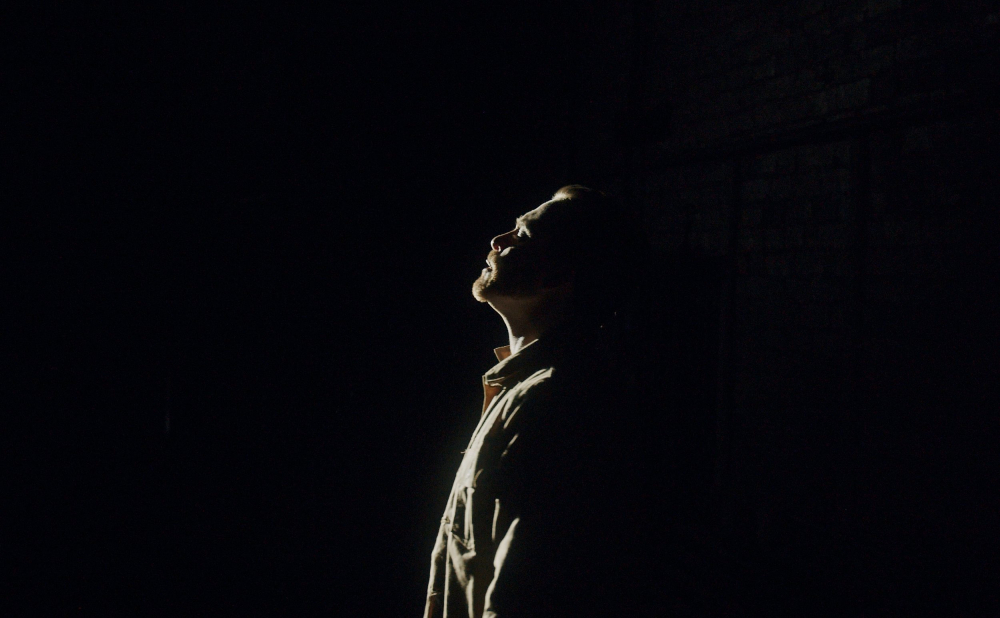

Trying to make it as a classic singer-songwriter is tough. Whether you aim for some variation of pop, rock, folk, or even metal, you choose to push your words to the front. That is a very vulnerable place to be as an artist. Much like a poet in the literary world, you have to believe that your capacity for writing can stand above any hint of genre or larger supporting structure. They also don’t do themselves any favors, often rejecting hooks, grooves, vibes, and more in devotion to the almighty phrasing. Thus, to avoid accusations of sounding like a generic cliché, these artists must find an angle that’s all their own.
For Erik Barth, this means leaning into his talents as a painter.

The genius of his debut album, Looncry, rests in how he approaches each tune like a bare canvas. His lovely tenor, which possesses tremendous range and heft, serves as his brush. His earnest yet rueful tone provides the palette he holds with such a light confidence. The assembled instrumentation – guitars, violins, piano, organ, and drums – are the colors that rest upon that palette. What could have been formulaic pop-rock takes on elements of country, folk, and soul, while also infusing the production with thoughtful restraint.
The result? Eleven elevated songs with clear-eyed artistry, relatable warmth, and tender energy. Barth reflects the impact of his heroes – Jason Isbell, Elliot Smith, and James Taylor, amongst others – by employing a sensitive strength. Yes, these tunes feature wonderful hooks in the choruses and heart-on-the-sleeve introspection in the verses. However, he resists being a copycat by crafting ‘ 90s-inflected rock reminiscent of Gin Blossoms and The Wallflowers.
We can extend the painter metaphor into the soundscapes developed by key songs.

The album opens with “Great Escape,” which offers the sensation of driving across the Midwest with windows open and hearts ablaze. “Madeline” sets you in the middle of an autumnal forest, hat in hand, singing to your first true love. On “The Fight,” it’s dusk, and we’re in the front yard of a ramshackle starter home wailing about the mistakes we made. “Loon Cries Mary” evinces being surrounded by the bleak beauty and existential loneliness of the American Southwest. Closing the record, “Oregon” swims in moody greens, blues, and browns of the titular state’s location in the Pacific Northwest.
Looncry feels remarkably fresh yet familiar. That is a testament to the talents of Erik Barth as well as his chosen artistic milieu and ability to transcend the typical. It also helps that he’s completely unafraid of his feelings. He wants you to know exactly what’s in his heart and mind. Then again, that’s why singer-songwriters long to remove any excess artistic baggage from their creations. With only one voice and one instrument, the words can rule. But sometimes, you must embrace a wider and deeper spectrum of color.