

Few albums have sparked as much cathartic release as Jagged Little Pill by Alanis Morissette. Dropping into the mid-’90s alt-rock landscape like a Molotov cocktail, Morissette’s major-label debut was a direct affront to the genre’s male-dominated gatekeeping. With its mix of confessional fury, barbed guitars, and unvarnished vulnerability, the album spoke to a generation of women. It proved that raw emotion could be both commercially potent and artistically groundbreaking.
If anyone can peel back the layers of that impact, it’s Selena Fragassi.
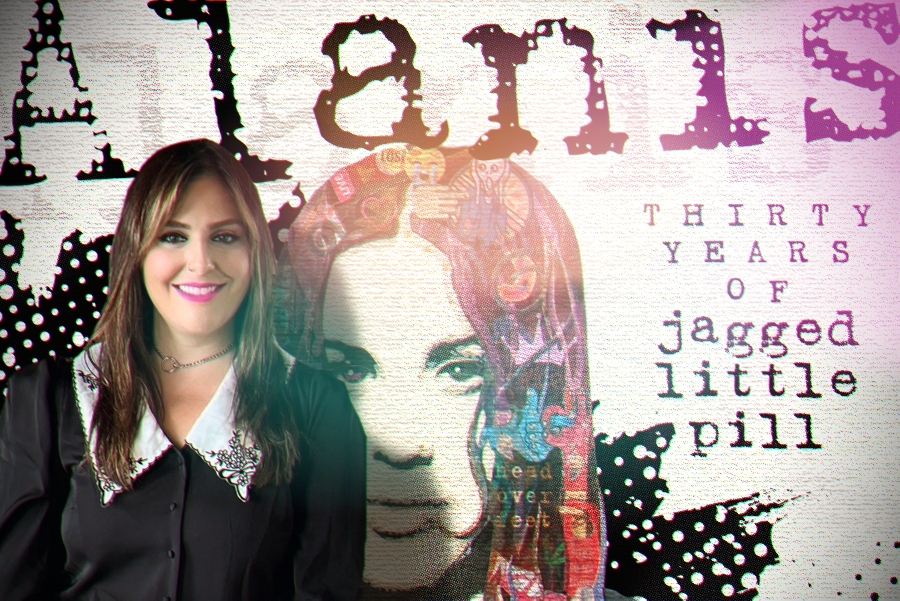
A veteran journalist with a reputation for unflinching insight and emotional clarity, Fragassi has long been a fixture of Chicago’s music writing scene. She’s chronicled pop culture’s evolution from the margins to the mainstream. With her new book, Alanis: Thirty Years of Jagged Little Pill, she examines a record that redefined what it meant to be angry, vulnerable, and female in the public eye.
Equal parts cultural critique and personal reckoning, the book re-frames Jagged Little Pill a seminal album and a blueprint for emotional survival. I sat down with Fragassi to discuss what drew her to the project. We discussed how Alanis Morissette still cuts through the noise nearly 30 years later and what her book reveals about the music industry’s ongoing discomfort with messy, powerful women.
Aaron Cooper: It’s probably a cliche question, so let’s get it out of the way – What got you into music?
Selena Fragassi: I actually come from a long line of very musical family members. My brother and grandfather can play by ear. My mom is a guitar player and was in small acoustic folk groups. Also, my father is a huge record collector and used to photograph concerts in the ’70s. I always grew frustrated that I didn’t have the same gift as so much of my family, and then became obsessed with how musicians work and channel their talent. I would go to as many shows as possible starting at 14 (some I had no right being at!), and it became a big interest point for me.
Coop: At that point, jumping into writing about music seemed pretty logical.
Selena: In the background, I had always been a writer, too. One of my childhood stories won a contest and was turned into a kids’ play. So, in 2009, when I was fired from a terrible corporate job for basically not giving a shit about copywriting, it was my chance to reinvent myself. I figured I love music, I love writing, so why not combine those? My very first story was on Adele in 2007, before she was really known. When she blew up shortly thereafter, and I was told I had one of the earliest pieces of American press on her, I figured maybe I can actually make this my job.
Coop: How did that prepare you for the jump from journalist to someone who literally ‘writes the book’ on music-related subjects?
Selena: Oh man, it was a huge leap of faith. I have a degree in fiction writing from Columbia College Chicago, so I’m versed in writing long-form narratives. But I never had the belief I could write a book. I kept getting stuck in my fiction. When the opportunity came up with Quarto/Epic Ink to write my first book on New Kids on the Block, I knew I couldn’t balk at this chance and I put my all into it.
I followed many of the same practices I’ve used as a journalist but just magnified. I combined all the research, listening to the music, pouring over the lyrics, and coming up with my own questions I wanted to answer in a book. Once I had the framework of the outline together, it gave me a road map.

Coop: What made you decide on writing Alanis: Thirty Years of Jagged Little Pill?
Selena: I started my career writing about women in music, not just Adele, but also contributing heavily to the beloved magazine, Venus Zine, and forming my own magazine, Boxx, about women in music. So, I knew I wanted one of my next books to follow suit. And you can’t get a better example of a woman who totally changed the industry than Alanis Morissette. But there’s also a strong personal connection I’ve had to that album.
Coop: It’s wild to think about Jagged Little Pill as such a monumental record that people remember they felt the first time they heard it. Even if they’re not diehard Alanis fans.
Selena: I talk about this in the intro. The album was passed on to me by my uncle. He and my dad have long been evangelists of great music and showed me that women had a big part in it. And from 13 to today, Jagged Little Pill has become such a bedrock of my existence. Every time I hear it, I take away something new. Alanis has been like a great big sister throughout my life, and I think for many other people, too.
Coop: With compiling all the history and mapping everything out, where did you even start?
Selena: Truly from the beginning. From my own relationship to the album as a maturing teen when it came out to Alanis’ own experiences as a young talent. I think it was important that the reader understands all that she went through as a young pop star in Canada and the harrowing experiences that came along with it that informed Jagged Little Pill.
Writing the book became an organic journey. Every day there was a new interview to read, a video to pour over, a new listen of the album. While I did a ton of prep work, I didn’t do all the research and then write like some might. It was both in tandem, and I think the discovery element was the best part of writing this book. For months, I was discovering something new every single day.
Coop: What was it about Alanis and Jagged Little Pill that connected with you personally?
Selena: I felt seen and heard and understood. To that point, so much of my personal music collection was pop, and don’t get me wrong, I love Madonna and Janet and Paula. But it was polished and a fantasy land to me. They were fever dreams of the women I saw around me.
With Alanis Morissette and what she was singing about, I had never heard anyone on record talking about the perfectionism I struggled with, my doubts about religion (she and I both were Catholic school detractors), the anger I sometimes had. It was mirroring conversations I had with my friends when we felt like our parents didn’t understand. To see that being approved of by huge monoliths like MTV and radio and magazine covers, it made me feel like I was okay to feel what I did, because she did, too, and she was famous for it.
Coop: While not the first to do it, how do you think Alanis influenced how the mainstream sees female artists like Taylor or Olivia?
Selena: Absolutely! There’s a cause-and-effect through line from Alanis to today’s talented pool of confessional singer-songwriters. Alanis was not the first at the craft, but she was the first to have commercial success. She brought in $300 million for a record company in one year by selling 33 million albums worldwide. That’s really in a league of her own, and her success made industry execs see dollar signs. And for better or worse, that finally made women artists viable and marketable. It’s why Lilith Fair came so soon after Jagged.
I love that album has become such a classic and handed down generation to generation. We have a whole league of talents right now who have taken from her playbook, espouse her talents, and praise her for paving the way. Everyone from Taylor Swift to Olivia Rodrigo, but also Halsey, PINK, Katy Perry, Billie Eilish have all talked about Alanis’ influence.
Coop: Do you have a favorite track from the album?
Selena: It’s funny, because it actually changed while writing this book. In the beginning, it was – like many – “You Oughta Know” for the guttural punch it provided. But now, it’s “Right Through You,” I think, of any song on the album, it’s her most passionate. It’s her narrowing her focus to take to task the male record executives who wanted to mold her, change her, dismiss her, and make advances on her. I think it’s pure fury in poetry form.

Coop: What are some of the biggest misconceptions about Jagged Little Pill or Alanis that really irk you?
Selena: First, that she was branded as an “angry woman” when it came out as if a) that was a bad thing and b) that was the one emotion she could own. It goes back to how women in entertainment have always had such a one-dimensional siloing that they could only be one thing. You couldn’t be angry and sad and happy and all the other million emotions that are part of the human experience. It showed that people didn’t even listen to the full album, because she brings the gamut of feelings to the surface.
The other thing that made me so irritated is how many assumed she did not write these lyrics herself. She must have been a studio mule, Glen Ballard must have done the heavy lifting. How could a 20-year-old know love and have such an advanced perspective on it? It was so demeaning and dismissive of young people and women.
Coop: The whole music journalistic scene has changed so much. I’ve seen plenty of publications and writers close up shop or move on to other things. Do you have any encouragement for those who are struggling?
Selena: It breaks my heart to see the sea change in journalism, particularly arts criticism. It’s essential we have analysis and context and an outsider perspective. I can’t tell you how many times there’s been an artist who’s learned about themselves and their art that they didn’t even realize before these takeaways. What I will say is that while the form will inevitably change, it will never go away. I believe strongly in that.
Even as AI takes a stronghold, no bot can replicate the human emotion that goes into writing about art. We need publications as much as we need the art itself. I think the strongest thing is to find your niche, your unique perspective, and your audience out there because there are people who want to read it or see it. Keep up the good work!
Coop: I always seem to run into you at a festival or a show around here. What are your thoughts on the music scene here in Chicago as a whole?
Selena: I think we are so incredibly lucky to be a part of the music and arts community in Chicago. I think there’s a real hunger and commitment here because we are in the Midwest and away from the coast capitals. But it makes people want it even more. There’s no work ethic like Chicago work ethic. And there are platforms for it here, from one of the most robust offerings of traditional venues to independent and DIY spaces. Art and artists are appreciated here.
I love writing more about locals than anyone mainstream, to be honest. Last year, I did a story on the new rock wave taking over the city, and I really do feel that energy. It’s in hip-hop and rap, too. And our history with Chicago blues. There are such strong roots here, and it’s why I’m out and about so much. It’s inescapable and beautiful.
Coop: I remember you and I having a brief exchange at Pitchfork about how much the festival scene was changing. What do you think they could do to maintain what makes our city’s music scene so special?
Selena: One of the most essential things is giving space to local artists and tapping into our own talents when booking the events. Pitchfork did that very well, and it’s one of the things I’ll miss about that event the most. Riot Fest does it well, too, especially giving space to artists from their own neighborhood in Lawndale and Little Village. I’d also like to see free tickets being given to more locals, especially inner-city kids. I think inspiration is a huge part of fostering art and could lead to more creators.

Coop: I imagine you’re taking a break from Alanis, so what have you been currently listening to!?
Selena: I’m working on a story on Die Spitz, so I’ve been listening to their catalog a ton. They are a band to seriously watch out for! I’ve also been spinning a lot of Amyl and the Sniffers, Wet Leg, and a lot of UK and Irish acts like Sam Fender, Wunderhorse, and Fontaines DC, as well as locals like Pixel Grip and Star Bandz. As festival season gets underway, I’ll be listening to a lot of the undercards to get familiar with their work.
Coop: Can you give us a hint as to what your next project will be?
Selena:I have a few more books coming out soon! One this fall on a very big rock act and some additional female artists later this year and in 2026. I also regularly contribute to the Chicago Sun-Times and SPIN, and I swore to myself I’d make some headway on my fiction book soon, now that I know I can write a book!
Coop: What’s the best way we can support what you do!?
Selena: You are too kind! I love connecting with people on socials (@selenafragassi on most) and at shows. I believe music is a community, and I’d be nowhere in this job without so many awesome people. I’d love to keep growing that network. I’m also hoping to do more live and broadcast events soon, so stay tuned!
Alanis: Thirty Years of Jagged Little Pill is available at Quarto