


On a crisp Sunday night in Chicago, Natalia Lafourcade transformed the grandeur of The Chicago Theatre into something deeply personal. As part of her Cancionera tour celebrating the album of the same name, she returned for a second sold-out night on June 15th. Landing gently on Father’s Day evening, the show felt less like a concert and more like an intimate play. Just one woman, one guitar, and a room full of hearts ready to be broken open, Lafourcade offered something rare: quiet, stripped-down sincerity. Her solo acoustic set just felt like a shared secret. Vulnerable, raw, and magnetic, she bared her soul to a Chicago crowd who met her with open arms and full hearts.
Walking into the storied Chicago Theatre, the first thing that struck you was the barebones and deliberate stage. Just a chair, a table, and a clothing rack. No spectacle, just intention. It was already apparent that this would be a different kind of night.
With a gentle yet firm welcome, Natalia Lafourcade encouraged the audience to put their phones away and, instead, fully embrace the moment unfolding before them.
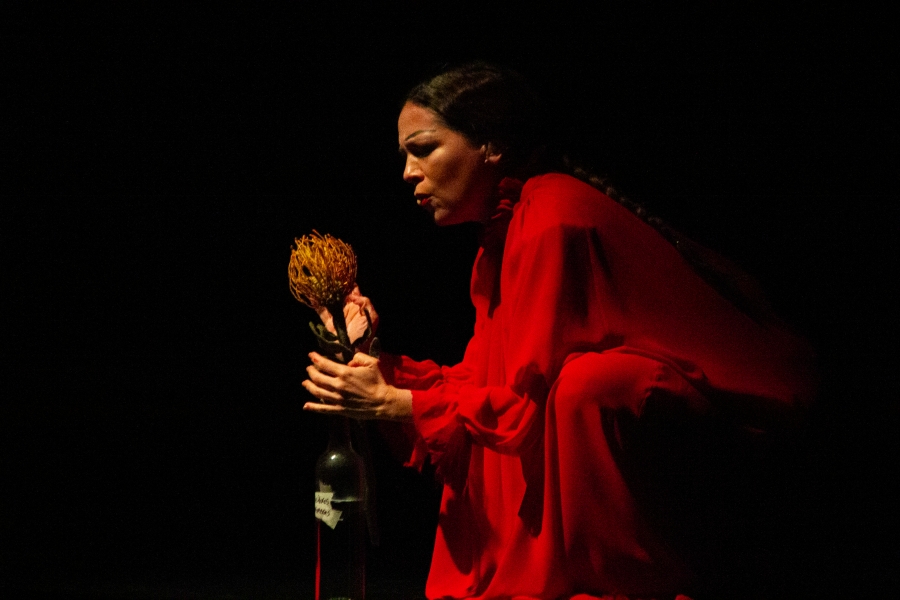
Then, just as the lights dimmed, a voice from the crowd pierced the quiet: “¡Que vivan los inmigrantes! ¡Y que viva Palestina!” (Long live the immigrants! And long live Palestine!) And with a thunderous applause, the stage was set for something raw and real. Entering softly carrying a single flower, Lafourcade opens with “Cancionera.” Cloaked in shadows, she sang with a quiet fire, her voice threading through the silence like a spell. And the spellbound audience didn’t dare break it.

Every detail of Natalia Lafourcade’s performance radiated intention and heart. From her carefully chosen wardrobe changes to her clever banter between songs, nothing felt accidental. Each and every element was lovingly crafted. The minimal stage design, for starters, only amplified the intimacy of the performance. Meanwhile, the lighting played its own quiet, deliberate role, gradually revealing Lafourcade’s expressions as she emerged from the shadows at just the right moments. Together, these elements created a mood that felt both delicate and intentional.
After her first outfit change, Lafourcade took a swig of mezcal, settled into a chair, and carried on with a warmth that felt both theatrical and deeply personal.
Throughout the night, she offered each song like a carefully chosen gift. First, one for the romantics with “El Palomo y la Negra,” and then another for the brokenhearted with “Nunca Es Suficiente.” In between, the audience shifted with her energy. When the moment called for stillness, they remained respectfully hushed. But as soon as it was time to sing, they came alive, joyfully belting out “Mexicana Hermosa” and “Soledad y el Mar” with unrestrained enthusiasm.
Nearly every song was performed acoustically, yet none lost their impact. Even tracks originally backed by full bands like “Mi tierra veracruzana” and “Lo que construimos” were stripped down without losing an ounce of their emotional weight. Somehow, they felt even bigger that night.

Throughout the night, Natalia Lafourcade didn’t just perform—she invited the audience into the experience.
QR codes scattered throughout the venue linked to a digital program, including the lyrics to “El Palomo y la Negra.” Later in the set, Lafourcade invited the crowd to sing along, and with a playful smile, she joked that it felt like a church service. In that moment, the connection between performer and audience deepened even further. And honestly, it was. There was something sacred in the way the audience responded, their voices rising with the reverence of a hymn, transforming her already-beautiful music into something transcendent. It didn’t just feel like a concert, it felt like communion.
Dedicating “Un derecho de nacimiento” to immigrants and their families, the room swelled with emotion. The crowd sang in powerful unison, echoing the song’s spirit of resistance and belonging.
Lafourcade closed the night with “Hasta la raíz” and “Mascaritas de cristal,” delivering a final wave of raw, thunderous emotion. As just one woman and one guitar, the impact was seismic. Every song felt like a journey through the entire emotional spectrum: joy, sorrow, hope, heartbreak, and healing. Without question, Natalia Lafourcade proved how music in its purest form can shake a room to its very core.
All photography by Oscar De Leon


